Laundry Business Investment in India: Cost, Licensing & ROI Guide (2026)
This laundry business investment guide India covers what it
actually costs to start an organized laundry business, how that investment
is allocated, what licenses you may need, and how to estimate realistic
returns — using LaundryPro's published franchise model as a reference
throughout.
Why This Investment Guide Matters Right Now
India's laundry industry is still largely unorganized, with much of the
market served by small neighborhood presses and individual operators.
This creates an opportunity for structured laundry businesses as urban
households increasingly look for reliable, professional garment-care
and pickup-and-delivery services.
A few characteristics make organized laundry different from many other
small-business options:
Recurring demand.
Once customers adopt a laundry service, usage can repeat weekly or
biweekly, creating the potential for recurring revenue rather than
one-off transactions.
Low inventory risk.
A laundry business processes customers' own garments, so there is
no perishable stock or traditional retail inventory tying up capital.
Streamlined operations.
Commercial equipment and order-management systems can simplify daily
workflows and reduce dependence on highly specialized labor once
staff are properly trained.
These factors do not guarantee profitability. Location, pricing,
operating costs, customer acquisition, service quality, and execution
all play a major role in determining business performance.
Laundry Business Investment in India: The Numbers
A starting investment of approximately
₹9 Lakhs to ₹20 Lakhs can be considered for an organized
laundry business, depending on location, store size, equipment
specifications, and business model.
LaundryPro's published franchise model currently includes three formats:
Franchise Model
Setup Area
Investment*
Staff
Payback Window
Royalty
Community Lite
200 sq. ft.
₹9 Lakhs + GST
2
15–17 months
5%
Urban Plus
300 sq. ft.
₹11.2 Lakhs + GST
2–3
15–17 months
5%
Metro Prime
350 sq. ft.
₹16.2 Lakhs + GST
3–4
15–17 months
5%
*Figures reflect currently published franchise information and
should be reconfirmed directly with LaundryPro before making an
investment decision.
Community Lite is positioned for apartment and gated-community setups,
Urban Plus for busier city neighborhoods, and Metro Prime for high-street
or premium locations that can support a broader service offering.
Where the Investment Actually Goes
A laundry business investment typically needs to cover three major areas:
1. Commercial Machinery
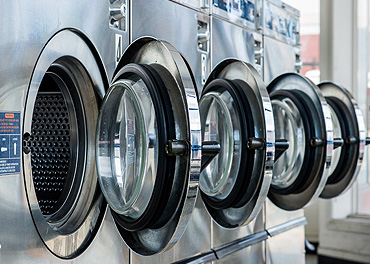
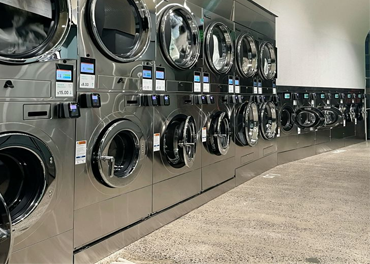
Commercial machinery is usually one of the largest capital expenses.
This can include commercial washer-extractors, industrial dryers,
steam ironing, and finishing equipment designed for repeated daily use.
2. Store Setup and Utilities
Store setup may include civil work, machine foundations, plumbing,
drainage, electrical connections, interiors, signage, and other
site-preparation requirements.
3. Working Capital
Working capital is a reserve for several months of operating expenses,
including rent, salaries, utilities, consumables, packaging,
maintenance, and local marketing while the customer base develops.
When calculating your total laundry business investment,
consider all three categories rather than looking only at the franchise
fee or machinery cost.
Licensing Requirements for a Laundry Business in India
Before opening a commercial laundry outlet, you may need several
registrations and approvals depending on your state, municipality,
premises, and business structure:
Shop and Establishment registration/license
GST registration, where applicable
State Pollution Control Board (SPCB) approval or consent,
depending on wastewater discharge and local regulations
Fire Department NOC, where applicable
Requirements can vary by location, so confirm the exact approvals with
the relevant local authorities before signing a lease or beginning
site work.
Equipment: A Key Part of the Investment Decision
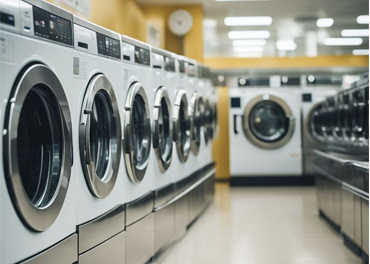
Commercial laundry equipment is designed for substantially heavier
workloads than domestic appliances. Using underpowered equipment for
commercial operations can increase maintenance requirements, operating
costs, downtime, and the risk of poor cleaning or garment handling.
LaundryPro states that its franchise investment includes
energy-efficient commercial machinery backed by a
5-year service warranty. The company also states that
it uses internationally certified equipment and eco-friendly cleaning
solvents.
Investors should verify the specific equipment models, certifications,
warranty coverage, and service terms applicable to their proposed
outlet before investing.
How to Start a Laundry Business: A Practical Sequence
1. Secure a Suitable Location
Consider a 200–500 sq. ft. ground-floor space in a residential society,
gated community, or suitable high-street location with good visibility
and accessibility.
2. Complete the Required Registrations
Determine the Shop and Establishment, GST, SPCB, fire-safety, and other
local requirements applicable to your location.
3. Prepare Utilities and Infrastructure
Arrange appropriate electricity, water supply, drainage, water storage,
and water treatment where required.
4. Install and Commission Equipment
Install the required washing, drying, ironing, and finishing equipment
and ensure that the machinery and utilities are tested before launch.
5. Set Up Order Management
Use suitable software or POS tools to manage customer orders, garment
tagging, payments, pickup and delivery, and customer records.
6. Launch Locally
Focus marketing on the store's immediate catchment through local SEO,
residential-community promotions, flyers, referral programs, and
introductory offers.
Estimating ROI on Your Laundry Business Investment
The basic annual ROI formula is:
ROI = Annual Net Profit ÷ Total Investment × 100
For example, if a business invests ₹9 Lakhs and
generates ₹6 Lakhs in annual net profit, the simple
annual ROI would be:
₹6,00,000 ÷ ₹9,00,000 × 100 = 66.7%
This is only an illustrative calculation, not a
projected return for a LaundryPro outlet.
Actual net profit must be calculated after considering rent, salaries,
electricity, water, consumables, maintenance, royalty, marketing,
taxes, and other operating expenses.
Similarly, payback should be calculated using actual cash generation
rather than assuming that the published franchise payback period will
apply to every location.
LaundryPro currently lists a
15–17 month payback period across its three franchise
formats. This is a published brand-level estimate and should not be
treated as a guaranteed result.
Investors should build a conservative monthly revenue and expense
model for their specific location before committing capital.
Ways to Improve Laundry Business Profitability
A well-planned laundry business can improve profitability by focusing
on customer volume, repeat orders, efficient operations, and the right
service mix. Investors can strengthen their returns by focusing on the
following areas:
Choose a high-demand location —
Residential communities, apartments, gated societies, and densely
populated areas can provide a steady flow of potential customers.
Build recurring customers —
Subscription plans, monthly laundry packages, and repeat-service
offers can encourage customers to use the service regularly.
Increase average order value —
Combining washing, ironing, dry cleaning, stain treatment, and
other garment-care services can increase revenue per customer.
Use pickup and delivery strategically —
Convenient doorstep service can expand the customer catchment area
and make the business more attractive to working professionals and
families.
Optimize equipment utilization —
Commercial machines can process higher volumes efficiently when
properly scheduled, helping the business handle more orders without
unnecessarily increasing infrastructure.
Control operating costs —
Monitoring electricity, water, detergent, packaging, maintenance,
and staffing costs can help protect profit margins as order volume
grows.
Invest in local marketing —
Local SEO, Google Business Profile optimization,
residential-community promotions, referrals, and targeted digital
advertising can help generate customers within the store's
immediate catchment.
Focus on customer retention —
Consistent cleaning quality, timely delivery, careful garment
handling, and responsive customer service can encourage repeat
business and referrals.
Offer the right service mix —
Combining regular laundry with dry cleaning and premium
garment-care services can create additional revenue opportunities.
Track business performance regularly —
Monitoring orders, revenue per customer, repeat-customer rate,
operating costs, and service demand helps identify which
activities are contributing most to profitability.
The key is to build a business model where more repeat customers,
efficient operations, and higher-value services work together to
increase revenue while keeping operating costs under control.
The exact profitability potential will depend on the location,
pricing, customer volume, and operating model.
Is This Investment Right for You?
A laundry business investment in India can provide an opportunity
to build a recurring service business with relatively low traditional
inventory requirements.
However, the business still requires careful location selection,
operational management, customer acquisition, and financial planning.
Before committing capital:
Shortlist potential locations.
Confirm actual rent and utility costs.
Check the required local licenses and approvals.
Understand exactly what the franchise investment includes.
Confirm royalty and recurring charges.
Verify equipment warranty and service terms.
Build a conservative monthly revenue and expense model.
Confirm current franchise terms directly with LaundryPro.
Frequently Asked Questions
What is the minimum laundry business investment in India?
LaundryPro's entry-level published franchise investment starts
at approximately ₹9 Lakhs + GST for its
Community Lite format. The exact package inclusions and current
commercial terms should be confirmed directly with the company
before investing.
What licenses are required for a laundry business in India?
Depending on the location and business structure, requirements may
include Shop and Establishment registration, GST registration,
State Pollution Control Board approval or consent, and
fire-safety approvals. Exact requirements vary by state and
municipality.
What are typical profit margins for a laundry business?
There is no single profit margin that applies to every laundry
business. Actual margins depend on rent, order volume, pricing,
staffing, utilities, consumables, maintenance, marketing,
royalty, and customer retention.
Investors should calculate margins using the economics of their
specific location rather than relying on a generic industry
percentage.
How long does it take to recover a laundry business investment?
LaundryPro currently lists a
15–17 month payback period for its franchise
formats. This is a published estimate rather than a guarantee.
Actual payback depends on revenue, operating costs, location,
pricing, and customer acquisition.
Is a franchise better than starting a laundry business independently?
A franchise can provide established equipment sourcing, training,
operational guidance, branding, and marketing support.
An independent business provides greater control but requires
the owner to develop the brand, source equipment, establish
processes, and build customer trust independently.
How does equipment quality affect a laundry business?
Commercial-grade equipment is designed for repeated,
higher-volume operation. Choosing equipment that is unsuitable
for commercial workloads can increase downtime, maintenance
expenses, operating costs, and service-quality issues.
Investors should compare equipment specifications, warranty
coverage, energy consumption, and after-sales support before
purchasing.